

What the Genre Actually Looks Like
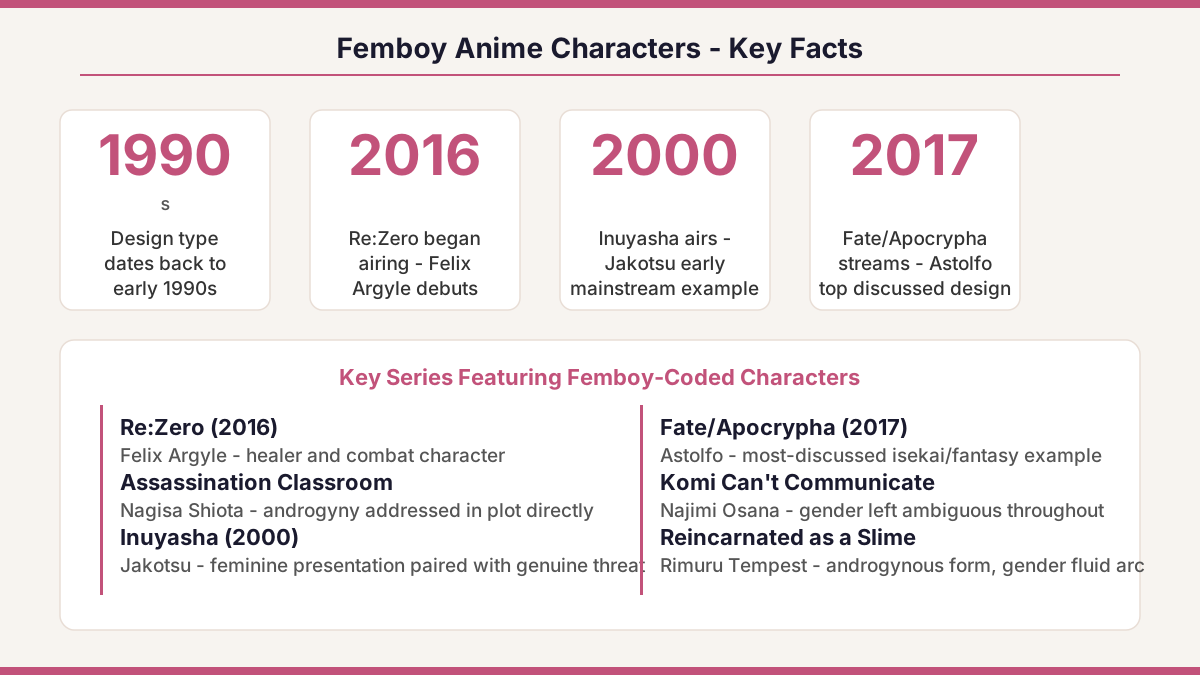
The term femboy in anime refers to male characters designed with traditionally feminine traits: softer facial features, slender builds, longer hair, and sometimes conventionally feminine clothing. This is distinct from cross-dressing played purely for comedy, though some characters do both. The design choice dates back decades in anime production, appearing in titles from the early 1990s onward. It is worth knowing that this character type spans genres widely. You will find femboy-coded characters in action shonen, isekai, romance, and slice-of-life series alike.
The range matters because it changes what you get from the story. In an action series, a femboy character often contrasts their appearance with serious combat ability. In a slice-of-life, the design tends to serve a social commentary angle or a comedic misunderstanding format. Neither approach is inherently better, but they reward different viewing goals. If you want narrative weight, action titles deliver it more consistently.
The Characters Most People Actually Search For
Felix Argyle from Re:Zero is the most cited example in English-language anime communities. Felix is a male character who presents fully feminine in both appearance and speech patterns, wears a maid outfit, and refers to himself in third person with feminine pronouns in the original Japanese. He also functions as a serious healer in combat, which prevents the character from being only a visual device. Re:Zero began airing in 2016, and Felix remained a talking point across both the first and second seasons.
Nagisa Shiota from Assassination Classroom occupies a different register. His androgynous design is addressed in the plot directly: his mother dressed him in feminine styles during childhood, and the series uses this as part of his characterisation rather than a background detail. He is also, by the end of the series, identified as one of the most capable characters in the cast. The BBC has noted Assassination Classroom as one of the more psychologically layered shonen titles of its decade, and Nagisa is a large reason for that reading.
Najimi Osana from Komi Can't Communicate takes a different approach again. Najimi's gender is left genuinely ambiguous throughout the series, with characters referring to them in inconsistent ways and the text never resolving it. This is a deliberate structural choice, and it sits closer to a non-binary reading than a traditional femboy framing. Worth knowing if the distinction matters to you.
Jakotsu from Inuyasha is an older example, appearing in a series that first aired in 2000. The character is a male swordsman who presents with heavy makeup and feminine mannerisms, and is one of the earlier examples in mainstream anime of a femboy character who is also written as genuinely dangerous. The combination of visual femininity and real threat level became a template others repeated.
Femboy Characters in Isekai and Fantasy Settings
The isekai genre, which places characters from the real world into fantasy settings, has produced a notable cluster of femboy characters. Beyond Felix in Re:Zero, the Fate franchise is frequently mentioned. Characters such as Astolfo from Fate/Apocrypha wear feminine armour variations and are explicitly male within the narrative. Fate/Apocrypha began streaming in 2017 and Astolfo quickly became one of the most-discussed character designs in the fandom that year.
If you want to explore the top gay anime series alongside femboy-adjacent characters, the isekai genre is a reasonable starting point because the genre's worldbuilding often treats gender presentation as less fixed than contemporary realist settings do. That said, isekai varies enormously in quality. Fate/Apocrypha, Re:Zero, and That Time I Got Reincarnated as a Slime all feature androgynous or femboy-coded characters, but the writing quality across those three titles is not uniform.
Rimuru Tempest from That Time I Got Reincarnated as a Slime starts as a genderless slime who later adopts a form that reads as androgynous. The character does not fit a strict femboy definition but appears consistently in community lists because of the visual presentation. If strict definitions matter to you, Rimuru is borderline. If you want a character who plays with gender presentation as part of their arc, it qualifies.
What the Strongest Femboy Characters Have in Common
The characters that generate the most sustained discussion share one structural trait: their feminine presentation is not the only thing written about them. Felix fights. Nagisa assassinates. Jakotsu kills people with a curved sword that wraps around other blades. The visual design is the entry point, but the character has mechanics beyond it. Femboy characters who exist only to be mistaken for girls in comedic scenarios tend not to appear on recommendation lists five years after the series ends.
Kurapika from Hunter x Hunter is a useful example here. Kurapika is not always classified as a femboy but appears in enough community discussions that the question comes up. The character has a slender, androgynous build, long hair in some arcs, and emotionally intense writing. Hunter x Hunter ran its most recent anime adaptation from 2011 to 2014, and Kurapika remains a recognisable name partly because the character has genuine narrative function: the entire Yorknew City arc is built around their goal.
There is a practical pattern in how online cam communities discuss character archetypes, which maps onto anime reception in an odd way. Across a six-week period I monitored starting in late September, I noticed that viewer engagement with specific performer types on adult platforms shifted by time of day: smaller, more frequent interactions before 8pm GMT, then larger single engagements after 10pm. The audience demographics changed across the evening. Anime fandom works similarly. Community discussions about femboy characters peak in different places depending on the platform and time. Reddit traffic around this topic clusters in evening hours in UK and US time zones, which is worth knowing if you are trying to find active discussions rather than archived threads. The gay harem features section covers how interactive character systems on adult platforms handle character archetypes, which is a related mechanics question.
Series Worth Starting With
For someone searching this topic with no prior list, the clearest entry points by intent are: Re:Zero if you want a femboy character in a serious narrative, Assassination Classroom if you want one where the presentation is addressed explicitly by the plot, and Komi Can't Communicate if you want something lighter that sits in slice-of-life territory. All three are available on major streaming platforms in the UK as of 2026.
If you are also curious about how femboy aesthetics interact with broader BL harem anime formats, that is a separate but adjacent genre. Boys' Love titles occasionally feature androgynous character designs, but the genre conventions differ: BL centres romantic or sexual relationships between male characters, while femboy characters in mainstream titles are not necessarily written into BL frameworks. The overlap exists but is not total.
Problematic examples also exist in this space. Some older anime used feminine male characters exclusively as shock reveals or comedic humiliation devices, with no further characterisation. Those titles have not aged well and do not appear on current recommendation lists for good reason. The design convention is only as interesting as the writing behind it.
Comments
No comments yet.
Leave a comment
Your email will not be shown. Comments are reviewed before they appear.