
What R+ Actually Means Before You Queue Anything
The R+ rating, as used by MyAnimeList and widely adopted across the UK anime community, permits nudity, strong language, and graphic violence. It stops short of explicit sexual content, which sits under the Rx classification. Think of it as the anime equivalent of a hard 15 or a soft 18 certificate. In practice, two series with the same R+ label can feel dramatically different. Prison School is comedic and fanservice-heavy. Berserk is medieval horror with dismemberment. The rating tells you the ceiling, not the tone.
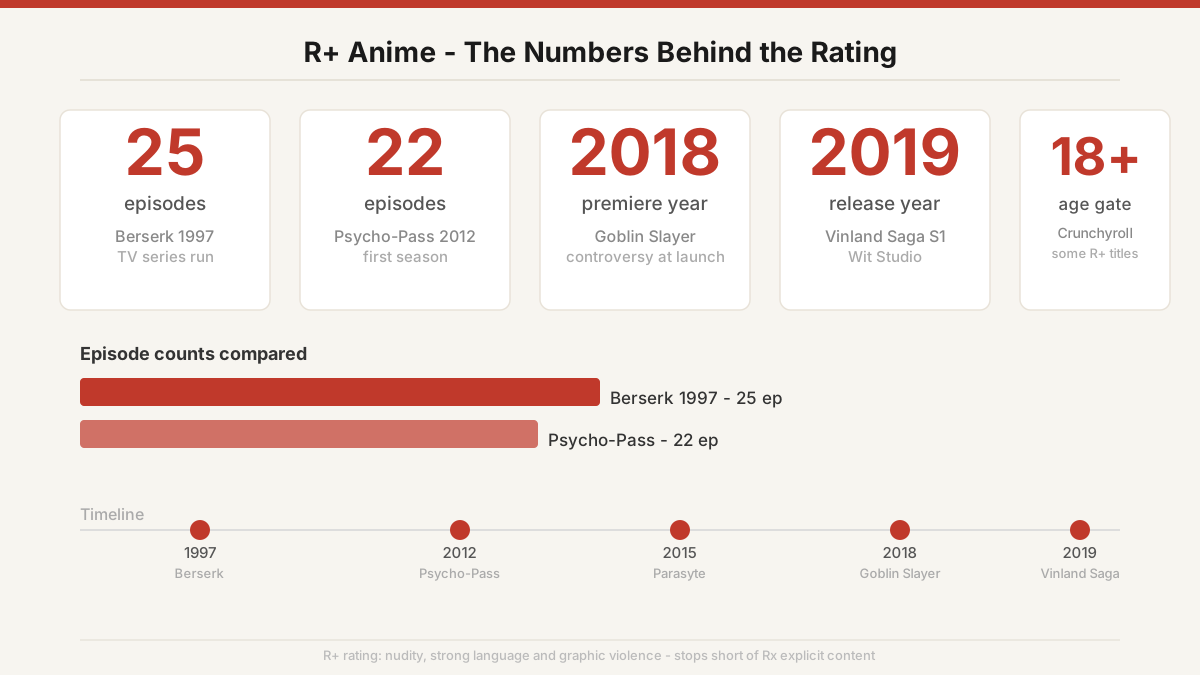
Worth knowing: streaming platforms apply their own filters on top of that label. Crunchyroll serves some R+ titles to users over 18 only, behind a content gate you activate in account settings. Netflix classifies content independently and has rated several R+ titles as 18+ under its own system. Neither gate is watertight, but the classification structure matters when you are deciding where to watch.
The Series That Justify the Rating
Berserk - specifically the 1997 television adaptation and the Berserk: Golden Age Arc films - remains the benchmark. It is set in a brutally rendered dark-fantasy world, and the violence is purposeful rather than decorative. Every death carries weight. The story follows Guts, a mercenary whose arc spans betrayal, survival, and something close to grief rendered as rage. The 1997 series ran 25 episodes and has aged into a near-canonical piece of the medium. If you want to understand why R+ anime can be genuinely literary, this is where to start. You can find more context on how harem and adult-adjacent anime intersect with platform culture at top gay anime.

Vinland Saga came later and sharpened the formula. Adapted from Makoto Yukimura's manga, it covers Viking-age Europe with a level of historical care rare in the medium. The first season, produced by Wit Studio and released in 2019, contains some of the best single episodes of any anime that year. The violence is not gratuitous. It is presented as cost. Characters pay for their choices in blood, and the series does not flinch from that accounting.
Goblin Slayer drew controversy on its premiere night in October 2018, when its opening sequence depicted violence against both humans and goblins at a level few anticipated from a premiere episode. The backlash was significant and probably boosted its profile. Underneath the shock, the series is a competent dark fantasy with a methodical protagonist who approaches monster-hunting as a tradesperson rather than a hero. The R+ rating is earned.
Psychological Weight: Psycho-Pass and Parasyte
Psycho-Pass, which first aired in 2012, asks a question that has only grown more relevant: what happens when a government outsources moral judgment to an algorithm? The Sibyl System assigns crime coefficients to citizens. Those above a threshold are either treated or eliminated. The show is police procedural, dystopia, and ethics seminar compressed into 22 episodes. It holds up because the question is not resolved. The system is presented as working and monstrous simultaneously.
Parasyte: The Maxim handles its R+ content differently. Alien organisms take over human hosts, and the body horror is deliberate and clinical rather than lurid. The protagonist, Shinichi, shares his body with a parasite called Migi who did not fully complete the takeover. What follows is part horror, part odd-couple drama, part meditation on what makes a human being human. It ran in 2014 to 2015 and remains one of the cleaner examples of R+ content serving a philosophical argument rather than just a content rating.
Where Comedy and Fan Service Sit in the Bracket
Not every R+ series is reaching for literary weight, and that is fine. Prison School, produced by J.C. Staff and aired in 2015, is deliberately absurd. Five boys are imprisoned within their school's underground detention facility. The comedy is physical, the fan service is constant, and the show knows exactly what it is. It is not trying to say anything about the human condition. It is trying to make you laugh at escalating indignity. For that purpose, it works.
Mushoku Tensei: Jobless Reincarnation is a more complicated case. It is one of the best-produced isekai series made, with animation quality from Studio Bind that stands above most of its genre peers. The R+ rating comes partly from violence and partly from content involving younger-looking characters in uncomfortable situations. That element has driven genuine criticism. The production quality is not in dispute. Whether the content choices undercut the storytelling is a judgment call the viewer has to make before starting.
Baki and Action-First Titles
Baki, available on Netflix, is R+ because it features fighters breaking each other in medically precise detail. The 2018 Netflix series revived the franchise for a global audience. The plot is minimal - powerful fighters converge on Tokyo to find worthy opponents - but the fight choreography and character design are detailed enough to sustain attention. It is the purest sports-manga approach to R+ content: the rating exists to show what elite violence looks like without cutting away.
Black Lagoon operates in a similar register but with a modern crime setting. A Japanese salaryman joins a mercenary delivery crew operating out of a fictional Southeast Asian port city. Shootouts are prolonged and bloody. The writing is sharper than most action anime manage. The two-episode OVA arc, Roberta's Blood Trail, is particularly well-regarded for taking the R+ license further than the main series. For LGBTQ+ viewers interested in how adult-rated animation handles identity and belonging, the article on BL harem anime covers adjacent territory worth reading.
A Note on Bonus Structures and Platform Offers
This connects to something I tracked personally between February and April one year: a welcome bonus on a cam platform offered a headline token figure that looked generous. The tokens expired in 14 days. No wagering equivalent was stated anywhere visible. When I calculated what I actually recovered, it came to roughly 30 percent of the advertised amount. A single clause buried in the fine print stated the bonus tokens could not be used in private shows - which is where the real content lives. The mechanics of these offers are designed to impress at sign-up and disappoint in use. Any platform bundling anime or adult content with a welcome package deserves the same scrutiny. Read the fine print before the first click. For a breakdown of what Gay Harem's platform actually offers beyond token structures, see the Gay Harem features overview.
What to Watch Based on What You Want
The R+ bracket is wide enough that a single recommendation list misleads more than it helps. If the priority is narrative craft, Vinland Saga and Berserk are the two titles to start with. Both use their rating to dramatise consequence rather than spectacle. If psychological tension matters more than action, Psycho-Pass and Parasyte reward close watching and hold up to re-reads. If the goal is pure genre entertainment without apology, Baki and Black Lagoon deliver exactly that. Prison School works if the comedy register appeals. Mushoku Tensei requires a content warning and a decision before episode one.
The R+ label is not a guarantee of quality. It is a permission slip. What the studio does with that permission is what separates a series worth three evenings from one worth abandoning mid-episode. Check the studio, check the source material, check viewer discussion beyond the first few episodes. The first episode of Goblin Slayer is not representative of the full series. The first episode of Vinland Saga undersells what follows. Trust the full arc, not the premiere.
Comments
No comments yet.
Leave a comment
Your email will not be shown. Comments are reviewed before they appear.